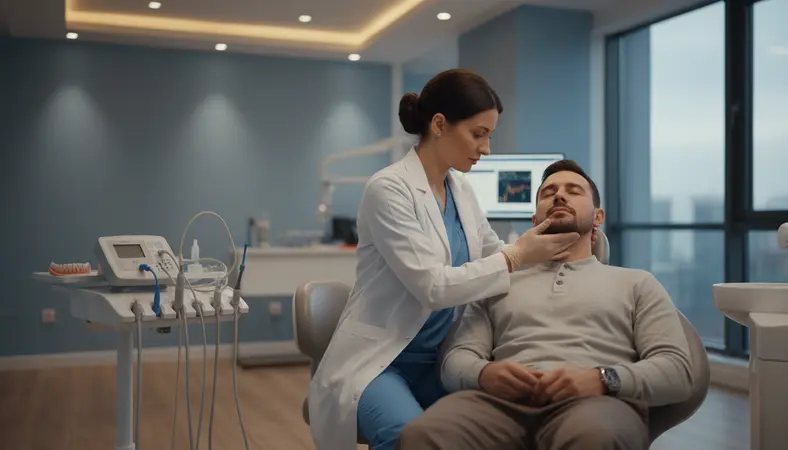
Obstructive sleep apnea (OSA) affects an estimated 30 million adults in the United States, yet roughly 80% of moderate-to-severe cases remain undiagnosed. For dental professionals, this represents not only a significant public health concern but also one of the most compelling practice expansion opportunities available today. By integrating dental sleep medicine into your existing services, you can address a critical patient need, generate substantial recurring revenue, and position your practice as a comprehensive healthcare destination.
The Revenue Opportunity in Dental Sleep Medicine
The dental sleep medicine market has experienced remarkable growth over the past decade and shows no signs of slowing. According to the American Academy of Dental Sleep Medicine (AADSM), oral appliance therapy (OAT) is now considered a first-line treatment for mild-to-moderate obstructive sleep apnea and a viable alternative for patients who cannot tolerate continuous positive airway pressure (CPAP) therapy.
From a financial perspective, a single oral appliance case typically generates between $2,500 and $5,000 in revenue, depending on the appliance selected, geographic location, and insurance reimbursement. Many practices report that adding sleep medicine services generates an additional $200,000 to $500,000 in annual revenue within the first two years. Unlike many dental procedures, oral appliance therapy also creates ongoing revenue streams through follow-up visits, appliance adjustments, titration appointments, and eventual appliance replacements every three to five years.
The overhead costs for launching a dental sleep medicine program are relatively modest. Beyond the training investment, startup costs typically include home sleep testing devices (approximately $2,000-$4,000 each), a pharyngometer or rhinometer for airway assessment ($5,000-$8,000), and marketing materials. Most practices recoup their initial investment within three to six months of actively treating sleep patients.
Understanding Your Scope of Practice
Before integrating sleep medicine into your dental practice, it is essential to understand the regulatory framework that governs this discipline. In the United States, dentists are legally permitted to fabricate and deliver oral appliances for the treatment of sleep-disordered breathing. However, the diagnosis of obstructive sleep apnea must be made by a physician, typically a board-certified sleep medicine specialist.
This requirement creates a natural collaboration model. Dentists serve as the treating provider for oral appliance therapy while working in partnership with sleep physicians who provide the diagnosis and ongoing medical oversight. Many state dental boards have issued specific guidelines regarding the role of dentists in sleep medicine, so it is critical to review your state's regulations before launching your program.
The American Dental Association (ADA) adopted a policy in 2017 affirming that dentists are the only healthcare professionals qualified to provide oral appliance therapy and that they should be involved in the treatment of sleep-disordered breathing. This policy reinforces the legitimacy and importance of the dental sleep medicine field.
Implementing Effective Screening Protocols
Successful dental sleep medicine practices begin with systematic screening. By incorporating sleep apnea screening into your routine patient intake process, you can identify candidates who may benefit from oral appliance therapy. Several validated screening tools make this process straightforward and efficient.
The STOP-BANG Questionnaire
The STOP-BANG questionnaire is one of the most widely used screening instruments for obstructive sleep apnea. It evaluates eight risk factors: Snoring, Tiredness, Observed apneas, high blood Pressure, Body mass index above 35, Age over 50, Neck circumference greater than 40 cm, and Gender (male). A score of three or more indicates an elevated risk and warrants referral for a sleep study. This questionnaire can be completed in under two minutes and integrated seamlessly into your existing intake forms.
The Epworth Sleepiness Scale
The Epworth Sleepiness Scale (ESS) measures a patient's general level of daytime sleepiness by asking them to rate their likelihood of dozing off in eight common situations. Scores above 10 suggest excessive daytime sleepiness, which is a hallmark symptom of untreated sleep apnea. When used in conjunction with the STOP-BANG, these tools provide a robust initial assessment.
Clinical Observations During Dental Exams
Dentists have a unique advantage in screening for sleep-disordered breathing because they routinely examine the oral cavity, airway, and craniofacial structures. During your standard exam, look for indicators such as a Mallampati score of III or IV, a scalloped tongue (suggesting the tongue is too large for the oral cavity), enlarged tonsils, a retrognathic mandible, a high-arched or narrow palate, and evidence of bruxism (worn tooth surfaces). These clinical findings, combined with questionnaire results, can help you identify strong candidates for referral and treatment.
Oral Appliance Options and Selection
There are currently over 100 FDA-cleared oral appliances available for the treatment of obstructive sleep apnea. These devices generally fall into two categories: mandibular advancement devices (MADs) and tongue-retaining devices (TRDs). Mandibular advancement devices are by far the most commonly prescribed and work by repositioning the lower jaw forward to maintain an open airway during sleep.
When selecting an appliance for your practice, consider factors such as adjustability (titratable designs are preferred), patient comfort, durability, ease of fabrication, and insurance acceptance. Some of the most popular and clinically validated appliances include the SomnoDent series, the Herbst-style devices, the EMA (Elastic Mandibular Advancement), and the ProSomnus line. It is advisable to become proficient with two or three different appliance designs so that you can offer options suited to different patient anatomies and preferences.
Our Dental Sleep Medicine Training course provides comprehensive hands-on instruction with the most widely used appliance systems, giving you the confidence to select and deliver the right device for each patient.
Insurance Billing and Reimbursement
One of the most attractive aspects of dental sleep medicine is that oral appliance therapy is typically billed to medical insurance, not dental insurance. This means treatment is covered under the patient's medical plan, which often provides better reimbursement and does not compete with their dental benefits.
The primary billing codes for oral appliance therapy include:
- E0486 — Oral device/appliance used to reduce upper airway collapsibility, adjustable or non-adjustable, custom fabricated, includes fitting and adjustment
- 95806 — Home sleep testing (if performed in-office)
- 99213/99214 — Evaluation and management codes for follow-up visits
- D5999 — Dental code that may be used for appliance repairs
Many practices choose to work with a third-party billing service that specializes in dental sleep medicine to maximize reimbursement and minimize claim denials. Companies like DentalWriter, Nierman Practice Management, and Sleep Group Solutions offer billing support specifically designed for dental sleep practices. Prior authorization is typically required, and documentation must include the sleep study results, physician prescription, and clinical notes demonstrating medical necessity.
Patient Demographics and Marketing
The ideal dental sleep medicine patient is often someone you are already seeing in your practice. Sleep apnea is most prevalent in adults between the ages of 40 and 70, with higher incidence in males, individuals with elevated BMI, and those with certain craniofacial characteristics. However, the condition affects all demographics, including women (especially postmenopausal) and younger adults with specific risk factors.
CPAP-intolerant patients represent your primary target market. Studies consistently show that CPAP compliance rates hover around 50%, meaning half of all diagnosed sleep apnea patients are either not using their devices or using them ineffectively. These patients are actively seeking an alternative, and oral appliance therapy fills that gap. Establishing referral relationships with local sleep physicians and pulmonologists who treat CPAP-intolerant patients is one of the most effective marketing strategies for building your sleep medicine caseload.
Additional marketing approaches include educating your existing patient base through in-office materials and email campaigns, creating informational content on your website targeting terms such as "CPAP alternative" and "sleep apnea mouthpiece," hosting community sleep health awareness events, and partnering with primary care physicians who screen for sleep apnea but may not be aware of oral appliance therapy options.
Getting Started with Training
Proper training is the foundation of a successful dental sleep medicine practice. While the ADA recognizes the role of dentists in treating sleep-disordered breathing, the complexity of the condition and the nuances of appliance therapy require specialized education beyond what dental school provides. A comprehensive training program should cover sleep physiology, diagnostic interpretation, appliance selection and fabrication, titration protocols, insurance billing, and interdisciplinary collaboration.
Facial Injectables offers a Dental Sleep Medicine Training program designed to give dental professionals the clinical knowledge and practical skills needed to confidently integrate sleep services into their practice. The course includes live patient demonstrations, hands-on appliance fitting, and business planning guidance to help you launch your program effectively.
The opportunity in dental sleep medicine is substantial, and the demand continues to grow as awareness of obstructive sleep apnea increases across the healthcare system. By investing in proper training and building a structured program, you can make a meaningful difference in your patients' health while significantly enhancing your practice's financial performance.