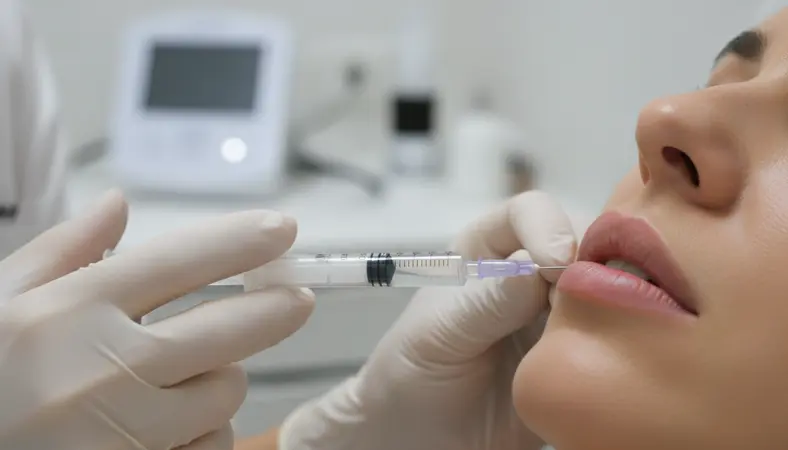
Lip augmentation consistently ranks among the most requested aesthetic procedures worldwide, and for good reason. Well-proportioned, hydrated lips are universally associated with youth, health, and attractiveness. However, lip filler also carries one of the highest rates of patient dissatisfaction when performed poorly. The "overfilled" or "duck lip" appearance has become a cultural cautionary tale, and patients are increasingly seeking injectors who can deliver subtle, natural-looking enhancement rather than obvious volume.
Achieving consistently natural lip augmentation results requires more than just injecting filler into the lip. It demands an understanding of lip aesthetics, mastery of multiple injection techniques, thoughtful product selection, and the restraint to know when enough is enough.
Understanding Ideal Lip Aesthetics
Before picking up a syringe, it is essential to understand the aesthetic parameters of attractive lips. While beauty is subjective and varies across cultures and individual preference, several widely accepted principles guide lip augmentation:
- Lower-to-upper lip ratio: The classical ideal is approximately 1:1.6, with the lower lip slightly fuller than the upper. In younger patients or certain ethnic backgrounds, a 1:1 ratio may be desired. An upper lip that is significantly larger than the lower lip almost always looks unnatural.
- Cupid's bow definition: A well-defined Cupid's bow with distinct peaks creates the visual impression of a youthful, shapely upper lip without requiring excessive volume.
- Philtral columns: The vertical ridges running from the nasal base to the Cupid's bow frame the upper lip. Enhancing these columns provides structural definition that reads as youthful.
- Vermillion border: A crisp, well-defined border between the pink lip (vermillion) and the surrounding skin creates contrast and perceived fullness without adding excessive volume to the lip body.
- Lip projection: When viewed from the side, lips should have gentle projection from the face. The lower lip should project slightly more than the upper lip, and neither should extend beyond the nasal tip when assessed in profile.
The Micro-Droplet Technique
The micro-droplet technique, sometimes called the serial puncture technique, involves placing many small deposits of filler (0.01 to 0.03 mL each) throughout the lip using a series of individual needle insertions. This technique provides the highest degree of control over filler placement and is particularly well-suited for patients seeking subtle enhancement or those with thin lips that require careful, incremental augmentation.
Using a 30G or 32G needle, enter the lip from the vermillion border at approximately a 30-degree angle. Advance the needle 2 to 3 mm into the lip body and deposit a tiny aliquot of filler as you withdraw. Space each injection point approximately 2 to 3 mm apart along the vermillion border. The advantage of this technique is precision: you can place filler exactly where it is needed and avoid areas that do not require augmentation.
The downside is that multiple needle insertions increase bruising risk and treatment time. However, for practitioners who prioritize precision and natural results, this trade-off is often worthwhile.
Vermillion Border Enhancement
Border enhancement focuses on defining the outline of the lip without necessarily adding volume to the lip body. This technique is ideal for patients who have good lip volume but have lost border definition due to aging, patients who want a subtle "lip flip" effect, or those looking for a natural enhancement that will not be obvious to others.
Using a fine-gauge needle (30G to 32G), inject small linear threads of filler directly along the vermillion border. The filler should be placed at the junction of the wet and dry lip, just within the vermillion, at a superficial depth. Trace the entire border from commissure to commissure, paying special attention to the Cupid's bow peaks. Use a soft, low-viscosity filler such as Juvederm Volbella or Restylane Kysse for this technique, as firmer products may create visible or palpable lumps along the border.
Total volume for border-only enhancement is typically 0.25 to 0.5 mL, making it one of the most conservative lip treatments available. The result is a crisper, more defined lip outline that catches light and creates the illusion of greater fullness.
Body and Volume Technique
When the primary goal is to add volume and projection to the lip body, a combination of linear threading and fanning techniques is most effective. Enter from one or both commissures with a 27G needle and advance along the wet-dry junction within the lip body. Deposit filler in a retrograde fashion (injecting as you withdraw) to create a smooth, continuous deposit of product.
For the lower lip, two to three horizontal passes through the lip body, depositing 0.1 to 0.15 mL per pass, typically provides balanced volumization. For the upper lip, one to two passes with slightly less volume (0.05 to 0.1 mL per pass) maintains the natural lower-to-upper ratio. Always mold the lip gently between your fingers after injecting to distribute the product evenly and eliminate any irregularities.
Product Selection for Lips
Not all dermal fillers are appropriate for lip injection. The lips are a dynamic structure that moves constantly during speech, eating, and facial expression. The ideal lip filler must be soft enough to feel natural, flexible enough to move with the tissue, and cohesive enough to maintain its shape over time.
- Juvederm Ultra XC: A versatile, medium-viscosity HA filler with good projection. Well-suited for patients wanting moderate volume enhancement. Contains lidocaine for patient comfort.
- Juvederm Volbella XC: A softer, lower-viscosity filler designed specifically for lips and perioral lines. Produces the most natural feel and is ideal for border definition, subtle enhancement, and patients who want a "no one can tell" result.
- Restylane Kysse: Features XpresHAn Technology for flexible, natural movement. Well-suited for lip body volume with a very natural feel during animation.
- Restylane Silk: The smallest particle size in the Restylane family, designed for precise lip definition and fine perioral lines.
As a general rule, use softer products for border definition and subtle enhancement, and reserve medium-viscosity products for patients seeking more significant volume. Never use high G-prime volumizing fillers (like Voluma or Lyft) in the lips, as they create an unnatural, hard appearance and feel.
Avoiding Overfilling: The Art of Restraint
The most important advanced lip augmentation skill may be knowing when to stop. Overfilling is the primary driver of unnatural lip results, and it happens gradually. A patient comes in for their initial treatment and is thrilled. Six months later they return for more. Then more. Over a year or two, the cumulative volume creates lips that are disproportionate to the rest of the face.
Set maximum volume guidelines for your practice. For most patients, 1 mL of filler per session is the upper limit for lips, and many patients achieve beautiful results with 0.5 to 0.7 mL. Never exceed what the lip tissue can comfortably accommodate, and always assess the patient's lips in the context of their overall facial proportions.
Honest communication with patients is essential. If a patient requests more volume than you believe is aesthetically appropriate, have a candid conversation about proportions and expectations. A practitioner who says "no" when appropriate earns more long-term trust and referrals than one who always says "yes."
Developing expertise in lip augmentation requires hands-on training with experienced faculty. Our Lip Filler Certification course provides comprehensive instruction in all the techniques covered here, plus live patient practice under expert supervision. For practitioners ready to refine their skills further, our Advanced Botox and Filler Training covers advanced lip techniques alongside full-face rejuvenation strategies.