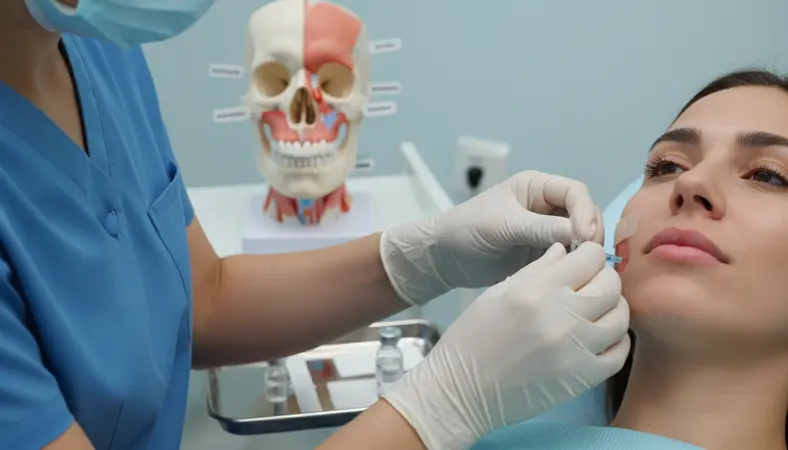
One of the most common barriers preventing practitioners from offering therapeutic Botox injections for TMJ disorders is the perceived complexity of insurance billing. While the billing landscape for therapeutic neurotoxin injections does require specific knowledge of coding, documentation, and payer requirements, it is entirely navigable with the right systems in place. This guide walks through the key billing concepts, CPT codes, documentation strategies, and practical tips for maximizing reimbursement for therapeutic Botox in your practice.
CPT Codes for TMJ Botox
Therapeutic Botox injections for TMJ disorders are billed to the patient's medical insurance using Current Procedural Terminology (CPT) codes. Understanding the correct codes and their proper application is fundamental to successful reimbursement.
Injection Procedure Codes
The primary procedure code for chemodenervation of the muscles of mastication is:
- CPT 64615 — Chemodenervation of muscle(s); muscle(s) innervated by facial nerve, unilateral (e.g., for blepharospasm, hemifacial spasm). This code is commonly used for Botox injections into the masseter and temporalis muscles for therapeutic TMD treatment.
- CPT 64616 — Chemodenervation of muscle(s); neck muscle(s), excluding muscles of the larynx, unilateral. This code may apply when treating cervical muscles contributing to referred jaw pain.
- CPT 64642 — Chemodenervation of one extremity; 1-4 muscle(s). Some payers may prefer this code for masseter injections, as the masseter is innervated by the trigeminal nerve (V3) rather than the facial nerve.
Important: When treating bilateral masseter and temporalis muscles, the procedure code is typically reported with modifier -50 (bilateral procedure) or submitted as two separate line items with modifiers -RT (right) and -LT (left), depending on the payer's requirements. Always verify the specific modifier protocol with each insurance carrier.
Drug Supply Code
In addition to the procedure code, you must separately bill for the botulinum toxin product itself:
- HCPCS J0585 — OnabotulinumtoxinA (Botox), per unit. Each "unit" in J0585 equals one unit of Botox. If you administer 100 units total, you would bill J0585 x 100 units.
- HCPCS J0587 — AbobotulinumtoxinA (Dysport), per 5 units.
- HCPCS J0588 — IncobotulinumtoxinA (Xeomin), per unit.
Evaluation and Management Codes
The initial patient evaluation and subsequent follow-up visits are billed using standard E/M codes:
- CPT 99203-99205 — Office visit, new patient (level determined by complexity of medical decision-making)
- CPT 99212-99215 — Office visit, established patient
E/M services provided on the same date as the injection may be billed separately if the evaluation is significant and separately identifiable from the injection procedure, using modifier -25 appended to the E/M code.
Documenting Medical Necessity
Medical necessity documentation is the cornerstone of successful insurance reimbursement for therapeutic Botox. Insurance carriers will deny claims that lack adequate documentation of why the treatment is medically necessary. Your clinical notes must clearly establish the following elements:
- Diagnosis: A clear TMD diagnosis with appropriate ICD-10 codes, most commonly M26.60 (temporomandibular joint disorder, unspecified), M26.62 (arthralgia of TMJ), M26.69 (other specified disorders of TMJ), or G24.4 (idiopathic orofacial dystonia/bruxism)
- Symptom severity: Quantified pain levels using VAS/NRS scores, documented functional limitations (restricted opening, difficulty eating, inability to work), and impact on quality of life
- Failed conservative treatments: Specific documentation of each previous treatment attempted, duration of each trial, and the reason for failure or inadequate response. Insurance carriers expect to see evidence that at least 2-3 conservative treatments were attempted before approving neurotoxin therapy
- Clinical examination findings: Objective findings including maximum interincisal opening measurements, muscle palpation tenderness, joint auscultation results, and evidence of bruxism
- Treatment plan rationale: A clear statement explaining why botulinum toxin therapy is indicated for this specific patient given their diagnosis, symptom severity, and treatment history
Prior Authorization Process
Most commercial insurance carriers and Medicare Advantage plans require prior authorization (PA) for therapeutic Botox injections. Submitting a thorough PA request is critical for avoiding claim denials and treatment delays. The typical PA process involves the following steps:
Step 1: Verify benefits. Before initiating the PA process, contact the patient's insurance carrier to confirm coverage for therapeutic botulinum toxin injections. Ask specifically about coverage for chemodenervation of the muscles of mastication and note the representative's name, reference number, and any specific requirements communicated.
Step 2: Submit the PA request. Most PA requests can be submitted electronically through the payer's provider portal or via fax. Include the patient's demographics, insurance information, ICD-10 diagnosis codes, CPT procedure codes, requested number of units, clinical notes documenting medical necessity, and any supporting imaging or specialist reports.
Step 3: Follow up. PA determinations are typically made within 5-15 business days. If the request is denied, carefully review the denial reason and prepare for the appeals process. Common denial reasons include insufficient documentation of failed conservative treatments, use of an incorrect CPT code, or the payer's determination that the treatment is experimental.
Insurance vs. Cash Pay Models
Many practices offer both insurance-based and cash-pay options for therapeutic Botox, allowing them to serve a broader patient population. Each model has distinct advantages:
Insurance billing provides access to a larger patient pool, validates the therapeutic nature of the treatment (important for patient perception), and can generate significant revenue per case. However, it requires staff trained in medical billing, involves administrative overhead for PA requests and claims management, and is subject to reimbursement rate variability and claim denials.
Cash pay eliminates administrative complexity, provides immediate revenue, and allows the practitioner full control over pricing. Typical cash-pay rates for TMJ Botox range from $500 to $1,500 per session depending on the total units administered and geographic market. Cash-pay models work best in practices with strong patient education programs that help patients understand the value and efficacy of the treatment.
A hybrid approach is often most effective: bill insurance for patients with coverage, offer competitive cash-pay rates for patients without coverage or with high deductibles, and provide transparent pricing information upfront to avoid surprises.
Navigating the Appeals Process
Claim denials are an inevitable part of insurance billing for therapeutic Botox, but a significant percentage of initial denials can be overturned on appeal. An effective appeals strategy includes:
- Timely filing: Most payers allow 60-180 days to file an appeal. Note the deadline immediately upon receiving a denial and calendar a reminder
- Address the specific denial reason: Tailor your appeal to directly address the stated reason for denial rather than submitting a generic letter
- Include supporting literature: Attach peer-reviewed studies demonstrating the efficacy and medical necessity of botulinum toxin for TMD. Key publications include the systematic review by Chen et al. (2015) in Toxins and the randomized controlled trial by Guarda-Nardini et al. (2012) in the Journal of Oral Rehabilitation
- Peer-to-peer review: Many payers offer the option of a peer-to-peer review, where the treating provider speaks directly with the payer's medical director. These conversations are often the most effective avenue for overturning denials
- Escalate to external review: If internal appeals are exhausted, most states provide an external review process through an independent review organization (IRO)
Our TMJ Injection Therapy Course includes dedicated sessions on billing, coding, and documentation strategies for therapeutic Botox, giving you the practical knowledge to implement these protocols in your practice from day one.