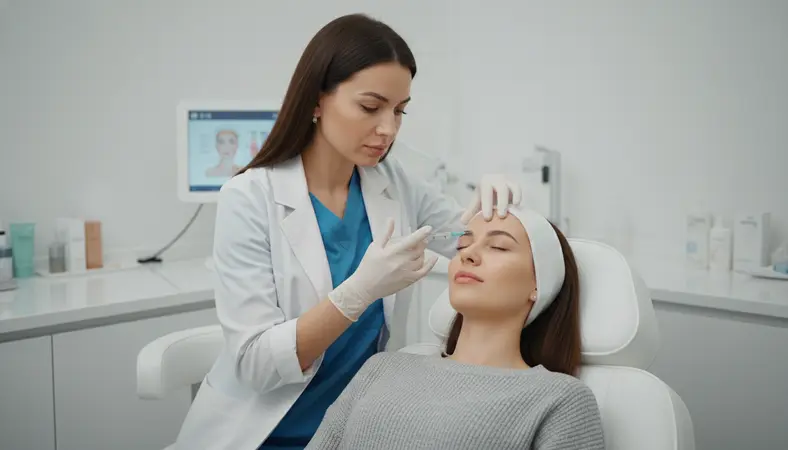
While most people associate Botox with smoothing forehead wrinkles and crow's feet, the therapeutic applications of botulinum toxin extend far beyond cosmetic enhancement. In fact, Botox was first approved by the FDA in 1989 for the treatment of strabismus and blepharospasm, medical conditions of the eye muscles, years before its cosmetic applications were ever explored. Today, botulinum toxin carries FDA approval for over a dozen therapeutic indications, and off-label medical uses continue to expand as research uncovers new applications.
For practitioners, understanding these therapeutic uses represents a significant opportunity to diversify revenue streams, serve a broader patient population, and in many cases bill insurance for treatments that would otherwise be entirely out-of-pocket. This article explores the major therapeutic applications of Botox and how they can strengthen your practice.
Chronic Migraine Treatment
In 2010, the FDA approved onabotulinumtoxinA (Botox) for the prophylactic treatment of chronic migraine, defined as 15 or more headache days per month with at least 8 of those meeting migraine criteria. This approval was based on two pivotal Phase III PREEMPT trials, which demonstrated that Botox reduced headache days by an average of 8 to 9 days per month compared to baseline.
The treatment protocol for chronic migraine is standardized: 155 units administered across 31 injection sites in 7 specific head and neck muscle regions. These include the frontalis, corrugator, procerus, occipitalis, temporalis, trapezius, and cervical paraspinal muscles. Each site receives 5 units using a fixed-site, fixed-dose paradigm, though an additional 40 units may be distributed using a follow-the-pain strategy in up to 8 additional sites.
What makes chronic migraine treatment particularly attractive for practitioners is that it is covered by most insurance plans, including Medicare. The revenue potential is substantial: treatments are administered every 12 weeks, creating a recurring patient visit schedule. Additionally, migraine patients often become interested in cosmetic Botox once they experience the aesthetic side effects of their therapeutic treatment, naturally expanding your cosmetic patient base.
TMJ Disorders and Bruxism
Temporomandibular joint (TMJ) disorders affect approximately 10 million Americans, causing jaw pain, headaches, difficulty chewing, and clicking or locking of the jaw. Traditional treatments include oral splints, physical therapy, and pain medications, but many patients find only partial relief from these approaches.
Botox injection into the masseter and temporalis muscles has emerged as an effective treatment for TMJ-related myofascial pain and bruxism. By reducing the contractile force of these muscles, Botox decreases the mechanical stress on the temporomandibular joint and alleviates the muscle tension that drives much of the pain. Typical dosing ranges from 25 to 50 units per masseter and 20 to 30 units per temporalis, though doses should be individualized based on muscle bulk and symptom severity.
This application is particularly relevant for dentists entering the injectable space. Our TMJ Injection Therapy Course provides comprehensive training in the assessment, injection technique, and patient management for TMJ-related conditions. Dentists are uniquely positioned to diagnose and treat these disorders given their existing expertise in oral and maxillofacial anatomy.
An additional benefit that patients appreciate is the facial slimming effect that results from masseter Botox. As the muscle atrophies over repeated treatment cycles, the lower face takes on a more tapered, V-shaped appearance. This cosmetic benefit provides additional motivation for patient compliance with their therapeutic treatment schedule.
Hyperhidrosis (Excessive Sweating)
Primary focal hyperhidrosis, a condition characterized by excessive sweating beyond what is physiologically necessary for thermoregulation, affects approximately 4.8% of the U.S. population. Botox received FDA approval for severe primary axillary hyperhidrosis in 2004, and it is also used off-label for palmar, plantar, and craniofacial hyperhidrosis.
The mechanism of action differs slightly from the cosmetic application. In hyperhidrosis treatment, botulinum toxin blocks the release of acetylcholine at the sympathetic nerve fibers that innervate eccrine sweat glands, rather than at the neuromuscular junction. The standard axillary protocol involves 50 units per axilla, administered intradermally across 10 to 15 injection sites spaced approximately 1 to 2 centimeters apart.
The iodine-starch test (Minor test) is a valuable diagnostic and planning tool. Iodine solution is applied to the treatment area and allowed to dry, followed by application of corn starch. Areas of active sweating turn dark blue-black, providing a visual map of the most active sweat glands and guiding precise injection placement. Results typically last 6 to 12 months for axillary treatment, longer than the typical 3 to 4 months seen with cosmetic use.
Cervical Dystonia and Muscle Spasticity
Cervical dystonia, also known as spasmodic torticollis, was one of the earliest therapeutic indications for botulinum toxin. This neurological movement disorder causes involuntary contraction of neck muscles, resulting in abnormal head postures and significant pain. Botox is considered a first-line treatment, with injections targeted to the specific muscles driving the abnormal posture.
Treatment requires careful assessment of the pattern of dystonia, including identification of the primary muscles involved. Common targets include the sternocleidomastoid, splenius capitis, levator scapulae, and trapezius muscles. Dosing is highly individualized, typically ranging from 150 to 300 units total, and electromyography (EMG) guidance may be used to confirm accurate muscle targeting in complex cases.
Beyond cervical dystonia, Botox is FDA-approved for upper and lower limb spasticity in adults, a common sequela of stroke, traumatic brain injury, and multiple sclerosis. While spasticity management is typically handled by neurologists and physiatrists, understanding this application helps practitioners identify patients who may benefit from referral and demonstrates the broad therapeutic scope of the toxin they work with daily.
Overactive Bladder
Overactive bladder (OAB) affects an estimated 33 million Americans and is characterized by urgency, frequency, nocturia, and urge incontinence. For patients who have failed behavioral modifications and oral anticholinergic medications, Botox injection into the detrusor muscle of the bladder offers a highly effective alternative.
The FDA-approved dose is 100 units for idiopathic OAB, administered via cystoscopy across 20 injection sites in the detrusor muscle. While this procedure is performed by urologists and urogynecologists, its existence underscores the remarkable versatility of botulinum toxin. Practitioners who understand the full therapeutic landscape of their product can speak with greater authority when educating patients and colleagues.
Expanding Your Practice with Therapeutic Botox
Adding therapeutic Botox services to your practice offers several strategic advantages. Insurance reimbursement provides more predictable revenue compared to the discretionary spending that drives cosmetic procedures. Therapeutic patients often commit to long-term treatment plans, providing consistent scheduling. And as mentioned, therapeutic patients frequently cross over into cosmetic services once they develop a trusting relationship with their injector.
The training required for therapeutic applications builds directly upon cosmetic injection skills. If you already understand facial anatomy, reconstitution, injection technique, and patient assessment, you have the foundation needed to expand into therapeutic indications. Our Botox Certification Course covers both cosmetic and therapeutic applications, giving you the comprehensive training needed to offer the full spectrum of botulinum toxin treatments.
The medical aesthetic field is evolving beyond purely cosmetic treatment. Practitioners who embrace the therapeutic potential of botulinum toxin position themselves as complete providers capable of addressing both the aesthetic desires and medical needs of their patients. This dual expertise not only increases revenue but also deepens the patient-provider relationship and elevates the standard of care you deliver.