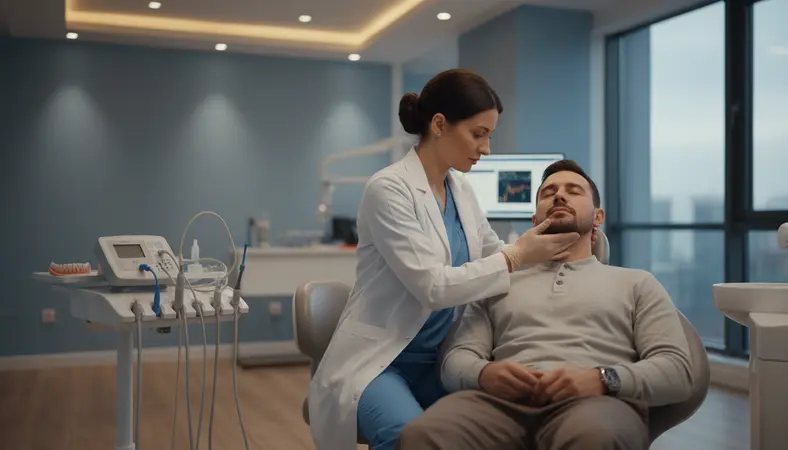
Dental sleep medicine sits at the intersection of dentistry and sleep medicine, representing a rapidly growing discipline that empowers dental professionals to play a direct role in diagnosing and treating one of the most prevalent chronic health conditions in the modern world. As obstructive sleep apnea (OSA) gains recognition as a systemic disease with far-reaching cardiovascular, metabolic, and neurocognitive consequences, the demand for trained dental sleep practitioners has never been higher.
The Prevalence of Sleep Apnea
Obstructive sleep apnea is far more common than most healthcare professionals realize. The Wisconsin Sleep Cohort Study, one of the longest-running epidemiological studies on sleep-disordered breathing, estimated that approximately 26% of adults between the ages of 30 and 70 have at least mild OSA, defined as an apnea-hypopnea index (AHI) of five or more events per hour. More conservative estimates from the American Academy of Sleep Medicine place the prevalence at 10-15% of the general adult population, but even these figures suggest that tens of millions of Americans are living with undiagnosed sleep-disordered breathing.
The health consequences of untreated OSA are severe and well-documented. Patients with moderate-to-severe obstructive sleep apnea face a two to three times greater risk of hypertension, a 30% increased risk of coronary artery disease, and significantly elevated rates of atrial fibrillation, stroke, type 2 diabetes, and motor vehicle accidents caused by excessive daytime sleepiness. The condition is also associated with depression, cognitive decline, and reduced quality of life. Treating sleep apnea is not a luxury; it is a medical necessity with life-altering implications.
The Role of Dentists in Sleep Medicine
Dentists occupy a uniquely advantageous position in the identification and treatment of sleep-disordered breathing. Unlike most other healthcare providers, dentists routinely examine the structures most directly involved in airway obstruction: the oral cavity, tongue, palate, tonsils, and craniofacial skeleton. A dental professional who understands the anatomical markers of OSA can identify at-risk patients during routine examinations and initiate the referral and treatment pathway.
The role of the dentist in sleep medicine extends well beyond simple screening. Qualified dental sleep practitioners are responsible for selecting and fabricating oral appliances, performing titration to optimize therapeutic efficacy, monitoring treatment outcomes with follow-up sleep testing, managing side effects such as temporomandibular joint changes or occlusal shifts, and coordinating care with the prescribing sleep physician. This level of clinical involvement requires specialized training that goes far beyond what is covered in traditional dental education.
The American Dental Association has formally recognized dentistry's role in treating sleep-disordered breathing, and the American Academy of Dental Sleep Medicine (AADSM) provides guidelines, resources, and a diplomate credentialing pathway for dental professionals who wish to establish expertise in this area.
Understanding Mandibular Advancement Devices
Mandibular advancement devices (MADs) are the primary therapeutic tool in dental sleep medicine. These custom-fabricated oral appliances work by repositioning the mandible in a protruded position during sleep, which in turn advances the tongue and soft tissues of the pharynx to maintain an open airway. The mechanism is straightforward but clinically profound: by preventing the collapse of the upper airway that characterizes obstructive sleep apnea, MADs can dramatically reduce or eliminate apneic events.
Clinical evidence strongly supports the efficacy of mandibular advancement devices. A 2015 meta-analysis published in the journal Sleep found that MADs reduced AHI by an average of 13.6 events per hour, with approximately 50-70% of patients achieving a therapeutic AHI below five events per hour (considered a clinical cure). While CPAP remains more effective at reducing AHI in severe cases, the superior compliance rates of oral appliances often result in comparable or superior real-world health outcomes. Studies have shown that MAD compliance rates range from 77-90%, compared to approximately 50% for CPAP therapy.
Modern MADs are titratable, meaning they can be progressively adjusted to increase mandibular protrusion until optimal therapeutic response is achieved. This titration process typically begins at approximately 50-70% of the patient's maximum protrusion and is advanced in 0.25-0.5mm increments over several weeks, guided by symptom improvement and follow-up sleep testing.
Collaboration with Sleep Physicians
Dental sleep medicine is inherently collaborative. The diagnostic process for obstructive sleep apnea requires a physician's involvement, as the formal diagnosis must be made by a medical doctor based on the results of polysomnography (in-lab sleep study) or home sleep apnea testing (HSAT). Once the diagnosis is established and oral appliance therapy is prescribed, the dental practitioner becomes the treating provider responsible for appliance selection, fabrication, titration, and ongoing management.
Building strong referral relationships with local sleep physicians, pulmonologists, and primary care providers is essential for a thriving dental sleep practice. Many sleep physicians welcome the opportunity to refer CPAP-intolerant patients to a qualified dental sleep practitioner, as they recognize that untreated OSA poses serious health risks and that oral appliance therapy offers a viable alternative.
Effective interdisciplinary communication should include a clear treatment summary sent to the referring physician after appliance delivery, follow-up reports documenting titration progress and symptom improvement, results of efficacy testing (typically a home sleep test performed with the appliance in place), and documentation of any side effects or complications and their management. This level of communication establishes credibility, strengthens referral relationships, and ensures that the patient receives comprehensive, coordinated care.
Training Requirements and Pathways
While there is no single mandatory certification required to practice dental sleep medicine in most states, the complexity of the discipline demands formal training. Dental professionals who wish to offer oral appliance therapy should develop competency in several key areas:
- Sleep physiology and pathology — Understanding the mechanisms of airway collapse, the stages of sleep, and the systemic consequences of untreated OSA
- Diagnostic interpretation — Reading and understanding polysomnography and home sleep test reports, including AHI, oxygen desaturation index, and respiratory disturbance index
- Craniofacial and airway assessment — Evaluating Mallampati score, tonsil grading, mandibular range of motion, and craniofacial morphology as they relate to airway patency
- Appliance selection and fabrication — Understanding the different appliance designs, their indications and contraindications, and the fabrication workflow
- Titration protocols — Systematically adjusting the appliance to achieve optimal therapeutic outcomes
- Side effect management — Recognizing and addressing common side effects including TMJ discomfort, occlusal changes, excessive salivation, and tooth movement
- Medical insurance billing — Navigating the medical billing codes and documentation requirements specific to dental sleep medicine
Facial Injectables offers a comprehensive Dental Sleep Medicine Training course that covers all of these competency areas through didactic instruction, live demonstrations, and hands-on clinical practice. Our program is designed for dental professionals at all experience levels, from those just beginning to explore sleep medicine to practitioners who want to refine their existing skills.
The field of dental sleep medicine offers dental professionals an extraordinary opportunity to expand their clinical impact, improve patient health outcomes, and build a sustainable revenue stream. As awareness of sleep-disordered breathing continues to grow among both patients and the broader medical community, the demand for trained dental sleep practitioners will only increase. Now is the time to invest in the knowledge and skills that will position your practice at the forefront of this evolving discipline.