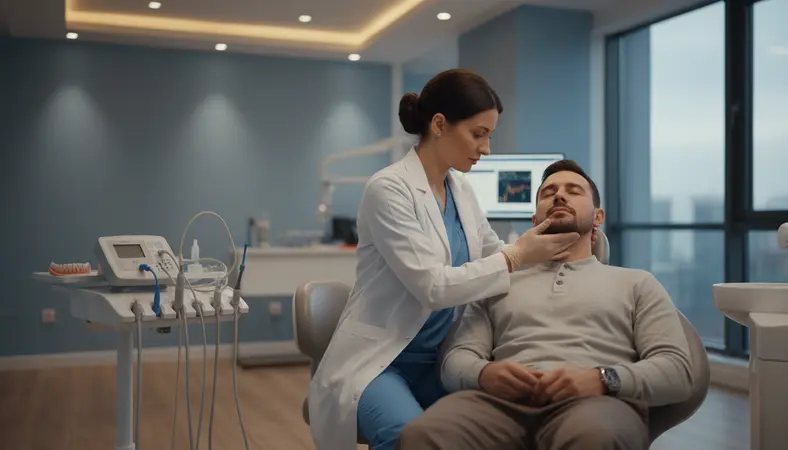
Oral appliance therapy (OAT) has transformed the treatment landscape for obstructive sleep apnea, offering patients a comfortable, portable, and highly effective alternative to continuous positive airway pressure (CPAP). For dental professionals entering the field of sleep medicine, mastering the nuances of oral appliance therapy—from device selection to long-term follow-up—is essential for delivering consistent clinical outcomes and building patient trust.
Types of Oral Appliances
Oral appliances for sleep-disordered breathing are broadly classified into two categories: mandibular advancement devices (MADs) and tongue-retaining devices (TRDs). While both aim to maintain airway patency during sleep, their mechanisms and clinical applications differ significantly.
Mandibular Advancement Devices (MADs)
MADs are the most widely prescribed oral appliances for OSA treatment, comprising approximately 95% of all devices used in clinical practice. These appliances consist of upper and lower trays that fit over the dental arches and are connected by a mechanism that holds the mandible in a protruded position during sleep. By advancing the lower jaw forward, MADs increase the cross-sectional area of the oropharyngeal airway, reduce pharyngeal collapsibility, and engage the genioglossus muscle to help maintain tongue position.
MADs are further subdivided by their adjustment mechanism. Titratable devices allow the clinician to incrementally increase mandibular protrusion using screws, elastic bands, or telescoping hardware, enabling precise dose-response optimization. Non-titratable (fixed) devices are set at a single position during fabrication and cannot be adjusted post-delivery. The American Academy of Sleep Medicine strongly recommends titratable devices, as they allow for therapeutic optimization and reduce the likelihood of treatment failure.
Tongue-Retaining Devices (TRDs)
Tongue-retaining devices use a suction bulb mechanism to hold the tongue in a protruded position, preventing it from falling back and obstructing the airway. TRDs are typically reserved for patients who are edentulous, have insufficient dentition to support a MAD, or have TMJ pathology that precludes mandibular advancement. While effective for select patients, TRDs generally have lower compliance rates due to discomfort and difficulty maintaining the tongue suction throughout the night.
Custom-Fabricated vs. Prefabricated Appliances
The distinction between custom-fabricated and prefabricated (boil-and-bite) oral appliances is clinically significant and has implications for both treatment efficacy and insurance reimbursement. Custom-fabricated appliances are made from dental impressions or digital scans of the individual patient's dentition and are manufactured in a dental laboratory. These devices offer superior fit, comfort, retention, and adjustability compared to their prefabricated counterparts.
Prefabricated appliances, sometimes marketed directly to consumers, use a thermoplastic material that is heated and molded to the teeth. While they are significantly less expensive, studies have consistently demonstrated inferior outcomes. A 2014 randomized controlled trial published in the Journal of Clinical Sleep Medicine found that custom MADs reduced AHI by 68% compared to only 40% for prefabricated devices. Furthermore, prefabricated appliances are not eligible for medical insurance reimbursement under CPT code E0486, which specifies custom fabrication.
As a dental sleep practitioner, you should always recommend custom-fabricated devices for therapeutic treatment. Prefabricated appliances may have a limited role as a screening or trial device to assess whether a patient is likely to respond to mandibular advancement before investing in a custom appliance.
Titration Protocols
Titration is the systematic process of adjusting the degree of mandibular advancement to achieve optimal therapeutic efficacy while minimizing side effects. Proper titration is arguably the most critical determinant of treatment success, and it requires both clinical skill and patient cooperation.
The recommended titration protocol begins with setting the appliance at approximately 50-60% of the patient's maximum protrusive range. This starting position balances initial efficacy with comfort, allowing the patient to acclimate to the device. After an adaptation period of one to two weeks, the patient returns for the first adjustment appointment.
Subsequent advancements are typically made in increments of 0.25mm to 0.5mm, with each adjustment followed by a one to two-week assessment period. The clinician evaluates the patient's symptom response at each visit, monitoring improvements in snoring intensity, witnessed apneas, daytime sleepiness (reassessed using the Epworth Sleepiness Scale), and subjective sleep quality. Titration continues until the patient reports significant symptom improvement or reaches 70-80% of maximum protrusion.
Once clinical symptoms have stabilized, an efficacy sleep study (either polysomnography or home sleep test) is performed with the appliance in place to objectively verify treatment response. The target is an AHI below five events per hour, though any significant reduction from baseline represents clinically meaningful improvement. If the AHI remains elevated despite maximum comfortable protrusion, the clinician may consider a different appliance design, combination therapy with positional therapy, or referral back to the sleep physician for alternative treatment options.
Efficacy Data and Clinical Evidence
The evidence base supporting oral appliance therapy has grown substantially over the past two decades. Several key findings from the literature inform best practices:
- AHI reduction: Custom MADs reduce AHI by an average of 50-70% in most patients, with complete normalization (AHI below 5) achieved in approximately 36-50% of cases
- Blood pressure: A 2019 meta-analysis in the European Respiratory Journal demonstrated that MADs reduce systolic blood pressure by an average of 2.5 mmHg and diastolic blood pressure by 2.0 mmHg—comparable to the effects of CPAP
- Daytime sleepiness: OAT consistently produces significant improvements in Epworth Sleepiness Scale scores, with reductions comparable to those achieved with CPAP
- Quality of life: Patients treated with oral appliances report improvements in sleep quality, energy levels, mood, and partner satisfaction at rates equal to or exceeding CPAP-treated patients
- Cardiovascular outcomes: Long-term observational studies suggest that compliant MAD users have cardiovascular event rates similar to CPAP users, supporting the clinical equivalence of the two therapies when compliance is accounted for
Patient Compliance Strategies
One of the greatest advantages of oral appliance therapy over CPAP is patient compliance. However, achieving and maintaining high compliance rates requires deliberate effort from the treating practitioner. Several strategies have proven effective in maximizing adherence:
Thorough patient education is the foundation of compliance. Patients who understand the serious health consequences of untreated OSA and the specific benefits of their treatment are more motivated to use their appliance consistently. Take time during the initial consultation to explain the condition, the mechanism of the appliance, and the expected timeline for symptom improvement.
Comfort optimization during the first two weeks is critical. Many patients who abandon oral appliance therapy do so within the first month due to discomfort, excessive salivation, or jaw soreness. Proactive management of these common adaptation symptoms—including adjusting the starting position, recommending jaw stretching exercises, and scheduling an early follow-up visit—can prevent premature discontinuation.
Regular follow-up appointments serve both therapeutic and motivational purposes. The AADSM recommends follow-up visits at one week, one month, three months, six months, and annually thereafter. These appointments allow you to assess compliance, adjust the appliance, monitor for side effects, and reinforce the importance of consistent use.
Long-Term Follow-Up Care
Dental sleep medicine is not a "set it and forget it" discipline. Long-term follow-up care is essential for monitoring treatment efficacy, managing side effects, and ensuring the ongoing structural integrity of the appliance. Common long-term considerations include monitoring for occlusal changes (particularly a decrease in overjet and overbite), assessing for TMJ symptoms, evaluating tooth mobility, and tracking changes in the patient's weight or sleep patterns that may affect treatment efficacy.
Morning repositioning exercises using an AM Aligner or similar device can help minimize occlusal changes by guiding the mandible back to its habitual position after overnight protrusion. Patients should be instructed to use these devices for 15-30 minutes each morning immediately after removing their sleep appliance.
For dental professionals ready to develop their skills in oral appliance therapy, our Dental Sleep Medicine Training course provides hands-on experience with multiple appliance systems and comprehensive instruction in titration protocols, side effect management, and long-term patient care.